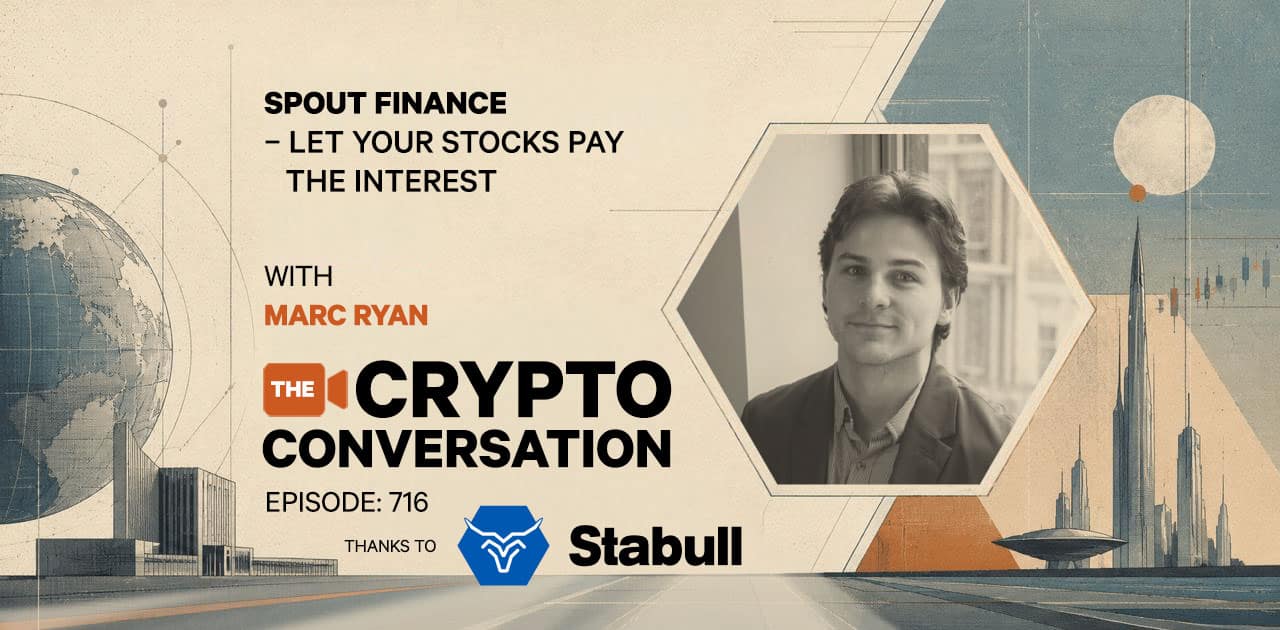
Marc Ryan is Co-Founder and CEO of Spout Finance, a Solana lending protocol that lets folks borrow USDC towards tokenized US shares with out paying curiosity. Primarily based in New York, Marc first bought into crypto throughout the 2017 ICO growth and stayed via DeFi summer season and the NFT cycle. In the meantime he labored as a expertise funding banker at HSBC, protecting fintech, software program and {hardware}, and that have confirmed him how cheaply rich shoppers might borrow towards their portfolios in contrast with everybody else.
Why you need to pay attention
Spout begins from an argument about who tokenized shares are actually for. Marc factors out that anybody with significant capital, virtually anyplace on the earth, can already open an Interactive Brokers account and purchase US equities, so placing shares on a blockchain shouldn’t be a lot of a breakthrough by itself. The extra fascinating query is what onchain shares can try this brokerage shares can’t. His reply is a lending pool that works like Aave or Kamino, with one structural distinction. As an alternative of charging debtors curiosity, Spout sells coated calls on their collateral each week, set properly above the present value, and makes use of the premiums to pay lenders. Debtors can take out as much as half the worth of their tokenized shares in USDC. The associated fee exhibits up as a small cap on their upside, which Marc estimates averages underneath half a % a yr, in contrast with margin charges of roughly 4.5% on the low-cost finish and 20% or extra at some emerging-market brokers. Lenders, in the meantime, earn premium revenue that doesn’t rely on whether or not the inventory goes up or down.
The dialog additionally covers how a small startup positions itself in a sector that’s now attracting main establishments. Marc says many of the buyers in Spout’s current $2 million spherical had been chosen for what they create past cash. Anchorage Digital supplies the institutional custody that giant funds require, Solana is the chain he considers greatest fitted to bringing retail onto monetary belongings, and former CFTC Chairman Chris Giancarlo advises on navigating US regulation. Marc additionally explains why Spout gave up issuing its personal tokenized shares. Working issuance alongside a lending protocol created an excessive amount of authorized and company overhead, so the group selected to be a permissionless layer that works with each issuer as an alternative of competing with them. Most of these issuers wrap shares held with a custodian corresponding to Alpaca. Marc contrasts that with native issuance from companies like Securitize and Superstate, the place the shares themselves dwell onchain and may be self-custodied.
That distinction frames his view of the present regulatory combat. After a batch of corporations objected to having their shares tokenized on OKXICE, the three way partnership between OKX and NYSE proprietor ICE, underneath the SEC’s new Innovation Exemption, Marc argues that wrappers will hold serving offshore buyers. US entry, in his view, will come via native issuance or nearer work with the DTCC. He’s candid {that a} Spout token is undecided. If one launches, it will enhance lender charges and permit choices to be bought additional out of the cash. Within the sizzling take spherical, Marc locations himself between Bitcoin maximalism and multi-chain opportunism. He says each public fairness will ultimately transfer onchain, describes how AI brokers now run elements of his personal enterprise, and names Again to the Future as his favourite movie.
Supporting hyperlinks
For those who loved the present please subscribe to the Crypto Dialog and provides us a 5-star ranking and a optimistic evaluation in no matter podcast app you might be utilizing.
Disclaimer: Any instructional content material, market commentary, analysis, evaluation, forecasts, teaching, coaching, or opinions supplied by impartial third events don’t signify the views of Plus500. Plus500 supplies self-trading execution-only providers and doesn’t present asset administration nor funding, monetary, authorized, or tax recommendation. Plus500 accepts no accountability or legal responsibility for any choices made or losses incurred because of reliance on data, analysis, instructional supplies, teaching, or providers supplied by third events.
Andy Pickering Andy Pickering Read More