
Key takeaways
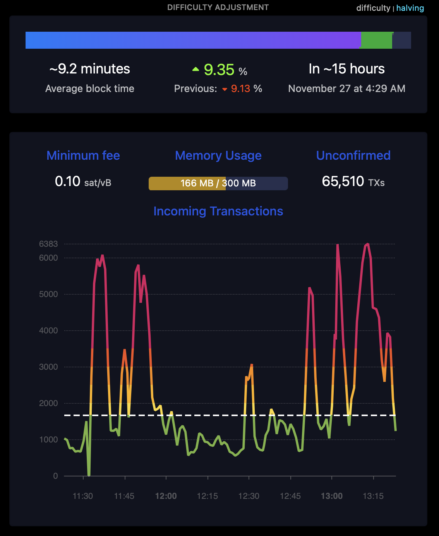
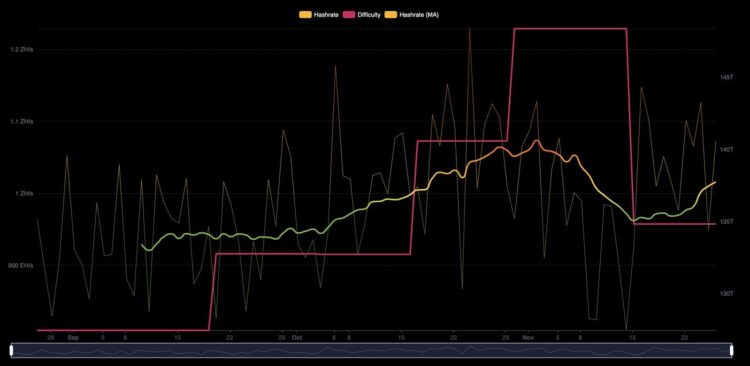
- Bitcoin mining issue is on track to rise about 9% on November 27, from 134.82 trillion towards 147 trillion, reversing a lot of the 9.13% minimize on November 14.
- Below in any other case unchanged situations, a 9% enhance cuts anticipated BTC output per unit of hashrate by roughly 8.3%.
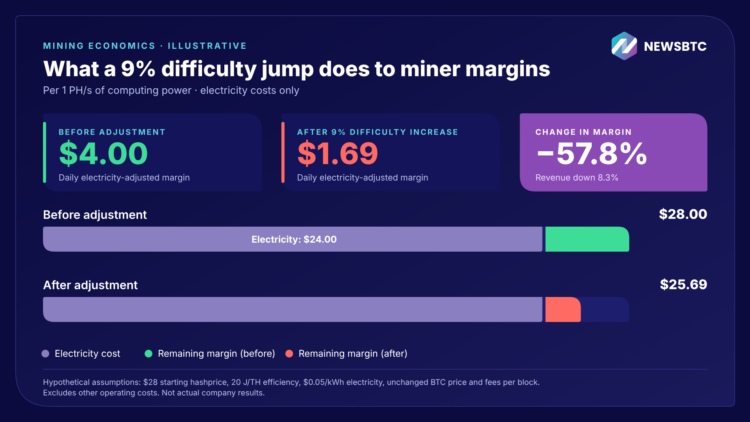
- At about $28 per petahash per day, a fleet operating at 20 J/TH and $0.05/kWh would see its electricity-adjusted margin fall from about $four to underneath $2.
- The impact is uneven: environment friendly operators with low-cost energy can soak up it, whereas older fleets might swap machines off.
- Problem alone is just not proof of extra miner promoting; miner balances, trade transfers and treasury disclosures are.
Bitcoin mining issue is on track to extend by roughly 9% on the subsequent community adjustment, anticipated on November 27. The rise would reverse a lot of the reduction miners acquired lower than two weeks in the past, leaving operators going through harder competitors for block rewards whereas Bitcoin trades properly beneath its earlier highs.
Present community estimates put mining issue at 134.82 trillion, following a 9.13% discount on November 14. If the projected enhance holds, issue will climb again towards 147 trillion.
For miners struggling to maintain their machines worthwhile, the timing is hardly best. The electrical energy invoice stays largely unchanged, however the identical {hardware} may quickly generate much less Bitcoin.
Bitcoin Mining Problem Is Reversing November’s Reduction
Bitcoin adjusts its mining issue each 2,016 blocks to keep up a mean block manufacturing time of roughly ten minutes.
When blocks are produced too rapidly, the community makes the mathematical situations for locating new blocks extra demanding. When manufacturing slows, issue strikes in the other way.
The earlier 9.13% reduction in Bitcoin mining difficulty gave lively miners some respiratory room. Operators may anticipate to earn extra Bitcoin from the identical quantity of computing energy, supplied different situations remained comparable.
That benefit now seems short-term.
The upcoming adjustment, expected at block 977,760, displays a quicker tempo of block manufacturing through the present issue interval.
A 9% enhance in issue doesn’t translate into an equivalent proportion discount in mining income. Below in any other case unchanged situations, anticipated Bitcoin manufacturing per unit of computing energy would decline by roughly 8.3%.
Take into account an operator whose machines at present generate 1 BTC over a given interval. Following a 9% issue enhance, the identical machines could be anticipated to supply roughly 0.917 BTC over an equal interval.
Nothing in regards to the {hardware} wants to alter for that discount to happen. The community has merely raised the quantity of labor required to compete for its rewards.
The Actual Drawback Is What Miners Earn From Their Machines
Mining issue solely tells a part of the story.
A extra helpful measure of the trade’s monetary situation is hashprice, which tracks the anticipated income generated by a given quantity of computing energy over a day.
Hashprice incorporates Bitcoin’s market worth, community issue and transaction payment income. It offers a clearer indication of whether or not a miner’s {hardware} is producing sufficient earnings to justify protecting it switched on.
Latest community knowledge from mining trade trackers places every day hashprice at round $28 per petahash of computing energy.
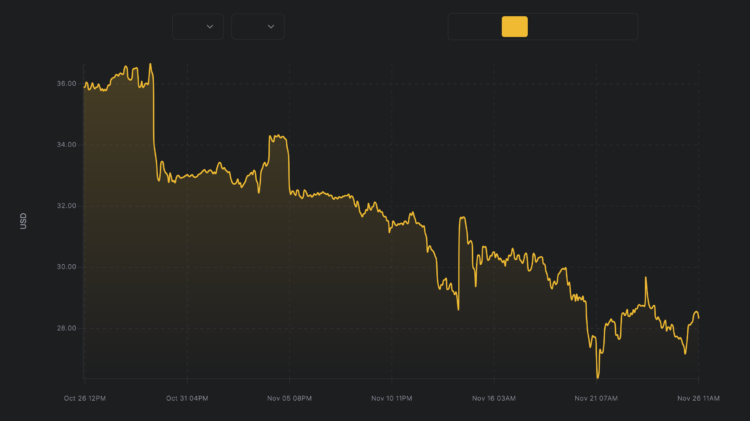
At that stage, the economics can develop into uncomfortable surprisingly rapidly.
Take into account a hypothetical mining fleet with an vitality effectivity of 20 joules per terahash and an electrical energy charge of $0.05 per kilowatt-hour.
Working one petahash of computing energy constantly would price roughly $24 per day in electrical energy alone. In opposition to $28 in gross every day mining income, that leaves simply $four earlier than internet hosting, upkeep, cooling, financing and different bills.
If issue rises by 9% whereas Bitcoin’s worth and common charges per block stay unchanged, that every day income would fall to roughly $25.69. The remaining electricity-adjusted margin would shrink to lower than $2.
The community adjustment is identical for everybody. Its monetary penalties usually are not.
An operator with newer machines and cheap energy might comfortably soak up the change. One other operating older tools may discover that switching off a part of its fleet makes extra monetary sense than persevering with to mine.
Bitcoin Miners Are Already Rethinking Their Enterprise Fashions
The trade’s response to tough mining economics extends past upgrading machines or negotiating cheaper electrical energy.
Some established Bitcoin mining businesses are redirecting infrastructure toward artificial intelligence and high-performance computing.
Entry to substantial electrical energy capability, established knowledge facilities and present infrastructure offers sure operators options that smaller mining companies might not have.
This doesn’t imply Bitcoin mining is disappearing. The projected issue enhance itself means that blocks are being produced quicker than the protocol’s goal charge through the present adjustment interval.
However the rising divergence between mining operators deserves consideration.
A Bitcoin mining facility with entry to cheap vitality and environment friendly tools operates underneath a really totally different set of financial situations from a enterprise counting on costly financing and getting old machines.
Rising issue doesn’t essentially make all the trade unprofitable. It makes the distinction between environment friendly and inefficient operators tougher to disregard.
Does Greater Mining Problem Imply Extra Bitcoin Promoting?
The prospect of shrinking margins raises an apparent query for Bitcoin buyers: will miners must promote extra BTC to finance their operations?
There’s a believable case for extra promoting from companies going through substantial working bills or debt repayments. Mining firms can’t typically settle their electrical energy payments with anticipated future Bitcoin rewards.
Nevertheless, community issue alone offers no proof that miners have elevated their Bitcoin gross sales.
Some operators maintain substantial treasury reserves. Others promote their manufacturing frequently, no matter market situations. Companies also can scale back working bills, shut down inefficient tools or get hold of financing as an alternative of liquidating further holdings.
Precise miner stability knowledge, trade transfers and firm treasury disclosures will present extra helpful proof than the problem adjustment itself.
The quick improvement to observe is whether or not the estimated enhance materializes on the subsequent adjustment block. After that, hashprice and adjustments in community computing energy will assist reveal how operators are responding.
Bitcoin’s protocol is doing precisely what it was designed to do. It adjusts the competitors for block rewards with out contemplating whether or not particular person mining companies can afford to stay aggressive.
The machines that develop into uneconomical have at all times been the operators’ drawback, not the community’s.
Tomás Rivas Read More